Tuesday, April 22, 2014
Questlove's Contemplations on Hip Hop, Week 1
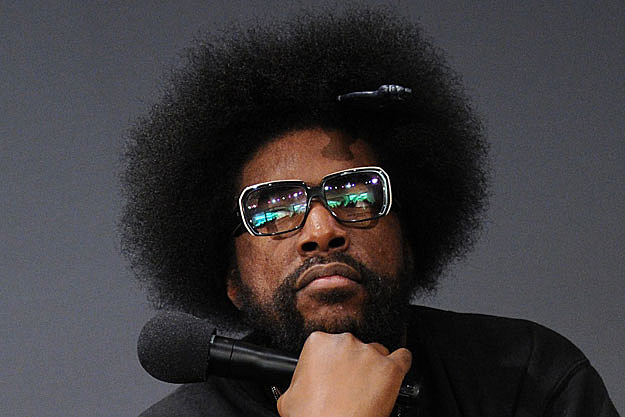
Esteemed hip hop artist Questlove will be sharing his thoughts about the current state of hip hop in a series of six posts that will be appearing on Vulture. We are lucky people! I feel certain that his observations will inspire a number of responses and I wanted to start by offering one here. If you haven't read the post yet, I would highly recommend that you take a moment to do so because it offers an insightful look at some of the ways that hip hop has morphed over time.
Questlove's main concern is that hip hop has simultaneously become omnipresent and impotent. Because it is everywhere, it is no longer challenging the norms--instead, it is reinforcing them, ensuring that the top artists remain at the top and making it difficult for others to obtain the same success. He notes that few black musicians are succeeding in any other style, which he sees as a dangerous shift. For those who would argue that this situation has happened before--and that it will correct itself in the future--Questlove responds that hip hop, itself, will likely not survive because popular music styles tend to disappear once they start their decline. While there are historical cycles, Questlove claims that the specific artistic forms do not come back. The fact that hip hop is no longer conveying truths suggests that its time is over.
In some respects, history does repeat itself. In fact, much of what Questlove is observing in hip hop did occur previously in American culture, with jazz. And it was jazz--or at least the styles that derived from jazz--that helped lead to hip hop. I guess you could either say the dinosaurs are dead (Questlove) or that the dinosaurs evolved into birds (my argument).
Indeed, many of the critiques that Questlove has for hip hop now were also leveled against jazz at various points in its long history. Today, we are accustomed to thinking of jazz as a fixed phenomenon, but in reality the term was coined only in the 1920s to describe a new style of music. What precisely it comprised was up for debate. Jazz brought together a number of earlier styles, most notably ragtime and the blues, both of which were typically associated with African-Americans. For the most part, these styles had been limited to specific geographical locations since it was hard for an aural tradition to travel far before recordings became widely available. Some areas, such as New Orleans, had further developed specific practices that were unique. However, the term 'jazz' eventually encompassed all of it. There were later developments too: big band, swing, and cool jazz, to name just a few. Also free jazz. Free jazz will be back.
Questlove feels that hip hop's reach has gone too far, spawning such concepts as 'hip hop fashion' and even 'hip hop architecture,' which has little to do with the music itself. But I think he errs in his claim that this type of conflation is unique to hip hop. There is another clear parallel with jazz here, since there was such as thing as 'jazz fashion'. Significant changes to women's clothes were associated with jazz, specifically 'flappers' and the dresses that were best suited for dancing to this new music. Were these clothes tied to some previously unknown truths revealed by jazz? I don't think so, but it's notable that this term is linked in such a ubiquitous way. In fact, there is an entire 'jazz age,' a moniker not yet applied to our era with hip hop.
Some of Questlove's critiques sound familiar and have been heard before about jazz. As Ingrid Monson has demonstrated, many jazz performers were criticized for their lack of engagement with civil rights movements during the 1950s and 1960s, which led to music that was perceived as being less relevant to society. Black nationalists also felt that jazz would help spur their movement, as Michael Hanson has shown. Specifically, these organizers claimed that free jazz would be ideal since everyone could participate in whatever way they innately felt. The problem, of course, was that free jazz is, you know, free jazz, and people weren't really all that into it. They went with funk instead, then wound up disappointed when it had a great beat for dancing but little to no political engagement.
Questlove's first article in this series brings up the question of what hip hop has achieved in its forty-year history. As he notes, 'the music originally evolved to paint portraits of real people and handle real problems at close range.' 'Evolved' is an important term here. Certainly hip hop did not burst forth as a means of social critique when it started, unless the soggy macaroni described in 'Rapper's Delight' is considered a 'real problem at close range.' In fact, hip hop may have accomplished more in terms of raising awareness about the injustices inherent in the African-American situation than any previous popular style. Albums such as Straight Outta Compton and Ready to Die did convey the challenges unique to black people in a direct and confrontational way--and in a way that jazz never achieved. As Eithne Quinn shows, the gangsta rap that emerged in the late 1980s/early 1990s reflected a population that was actively oppressed, and these songs targeted the oppressors. But for the most part, this socially engaged hip hop with a popular following was limited to only a small part of hip hop's forty-year history--perhaps about a decade. This is not to say that other artists have not been creating music that is socially engaged, but instead that the albums most associated with this specific type of civil rights issues are only one part of hip hop's legacy.
It is entirely possible that hip hop will never achieve this level of insight toward the culture from which it emerged again. But I don't see this as necessarily the death knell for this style. The roots that jazz provided were deep and strong, resulting in countless later movements. Funk emerged from jazz, leading to disco, which provided the ground for the first experiments in hip hop. More likely, then, the phenomenal influence of hip hop will be channeled into new movements and approaches, which is typical for any type of popular music. I somehow doubt that black musicians will be absent from this discussion; after all, their importance for the early influences of jazz, and several of its key transformations, cannot be overstated. Questlove, as an artist, is justifiably concerned for the style of music that he has made his own. As a historian/critic sitting behind a computer and with little at stake in this argument, I can afford to take a broader view.
Either way, I am looking forward to installment 2!
Monday, April 21, 2014
Great Rap Beefs in History: The Fondue Chapter
In a thought-provoking post for this blog about Nas and the National Symphony Orchestra, Kira asked, 'Are hip hop artists performing the politics of respectability in these spaces?' This past weekend reinforced to me the fact that hip hop artists have obtained respectability, as evinced by the fact that they have entree into all kinds of 'venues' from which they were previously shut out. Three examples will suffice:
1) Hip hop is all the freak over NPR: Yes, NPR. The station that has long demarcated a certain higher level of radio culture--and is generally perceived as the choice for white, educated listeners, as this parody evinces:
In the past week alone, I have listened to hip hop appearing on numerous shows, mostly in a contemplative or esteemed light. There was the Radiolab segment discussed previously on this blog. Jesse Thorn, on Bulleye, offered his take on Nas's Illmatic as the best hip hop album of all time. A segment on Ask Me Another featured a version of $25 000 Pyramid involving hip hop songs, with actor/comedian Hannibal Buress providing the clues. Evidently, NPR believes that its listeners are conversant with 'classic' hip hop, enough so that they will understand the clues of this game. I think that NPR is correct here, but this is a bold statement about how completely hip hop has been absorbed into contemporary American culture. Also, there is a very white rap of 'Rapper's Delight' here (at around 1:30). The contestant even substitutes 'NPR' into one of the lines. That's right. There is now, theoretically, an NPR rap.
2) Hip hop at hockey: I attended Game 2 of the Tampa Bay Lightning versus the Montreal Canadiens on Friday night. During the second intermission, as the zambonis were driving around the ice, they were accompanied by the start of Notorious B.I.G.'s 'Hypnotize.' This is new, at least since 2011.
I cannot think of a single sport that is whiter than hockey. When I was a kid, there would be, literally, one black player in the league at any given time, and that one guy was Grant Fuhr (there is a whole Wikipedia category for precisely this topic).
'Hockey music,' in my experience, tends to reflect this demographic. Favorite styles include heavy metal (perhaps not surprisingly, this track gets played to start the third period at Lightning games) or dance music from the 90s. Yes, it must be from the 90s. Yes, it must be dance music. You might be wondering what we listened to before that and the answer is organ music and Stompin' Tom Connors. A great example that is even featured on the EA Sports 2011 NHL Game:
Biggie? No. I used to think that the fact you could hear hip hop anywhere was notable, but that was at bars and such. Now that you hear it at hockey and on NPR, I am willing to declare that we have reached a new era of cultural saturation.
3) Terrible rap beefs on TSN: What is TSN? The Sports Network. It is the Canadian equivalent of ESPN. And you won't believe what Drake said this week on TSN about Jay-Z. At least, you shouldn't believe it, because it's pretty silly:
Drake claims that Jay-Z eats fondue. From a plate. If you can imagine. I can't because I don't know, exactly, how you eat fondue from a plate. It needs some kind of warming mechanism to keep it viscous, like the type traditionally placed under a fondue pot.
Let's take a moment here. What does this even mean? Supposedly, that Jay-Z is not keeping it real, because only fancy people eat fondue. At least, this seems to be the general interpretation of this statement. He has moved beyond bougie, to whatever class where you eat fondue off a plate on a regular basis. Now, I am not, by any means, advocating a return to the violent outcomes of previous rapper beefs. But when one side is accusing the other of fondue eating? That seems like we have entered a new level of respectability, to go back to Kira's quote. Drake made no claims against Jay-Z's ability to rap or produce or do all of that music stuff. He just might be a little high-faluting for your average person.
Be sure to read this story on A.V. Club, which features some classic commentary on this particular beef. Perhaps Alton Brown will weigh in for Team Jay-Z. Perhaps Jay-Z will respond by besmirching poutine. Perhaps those radio bleeps ('f******') really are bleeping out 'fondues.' 'Cheese rules everything around me.' And let's not forget that Jay-Z has claimed in the past that he 'checks cheddar like a food inspector.'
Stay tuned for what shapes up to be the most mouth-watering rapper beef ever to go down. Or at least one of the most respectable.
Labels:
Drake,
Fondue,
Grant Fuhr,
hip hop,
hockey,
Illmatic,
Jay-Z,
Nas,
Notorious BIG,
NPR,
Rap beefs,
Stompin Tom Connors,
Zamboni
Sunday, April 20, 2014
A Girl Group Twerks to Classical Music In Hopes of "Bringing It Back"
The San Francisco Globe has an article out right now on a South Korean Girl Group who's twerking to Dvorak's New World Symphony. An organization known as B-Classic is seeking to "revive" classical music, fearing that it's become too static/dead. They want to give classical music the same recognition as other genres of music (pop, rock, and so on) and they've launched a competition called the Classical Comeback Video to encourage listeners/fans to submit their own music video to a piece of classical music.
1. The objectification of women
2. The imitation of black female bodies
3. Pandering
4. The misuse of the phrase "Comeback" here
GAH. I'll leave it at that for now. Share with us why you think this video is not ok in the comments or on our facebook page.
Peace out.
~ Your raging feminist/art music lover
Just how good is 'Blazing Saddles'? Even better than you thought
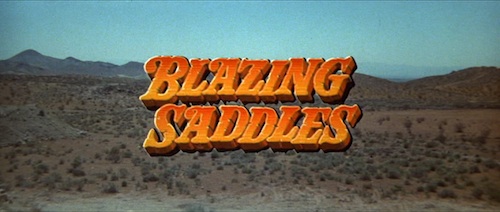
I am late to this party, but I recently discovered a 'Code Switch' post celebrating the anniversary of Mel Brooks' classic film Blazing Saddles (1974). There is a great deal to say about this film, and it will probably merit its own post overall, but I wanted to demonstrate how it is not only a satire of race relations, as the post demonstrates, but also that I think it is very criticizing the 'hidden' element in Westerns up until this time. One scene from early in the movie suffices, and it is a doozy:
(There is language. And some exceedingly white dancing. Go ahead, rewatch it, I know that you were laughing too hard during the exceedingly white dancing to fully appreciate it)
I think that Mel Brooks' critique here is pointed squarely and directly at the unquestionably iconic American musical, Oklahoma! The show debuted in 1943 and was a phenomenal success (if you want to know more, I would highly recommend Tim Carter's book on the subject). This led, of course, to a movie adaption, which appeared in 1955. In revisiting Oklahoma!, I found that it was an incredibly weird show. The morale of the story, to me, is that if you act 'normal' you will be accepted by society, even if you have a funny accent like Ali Hakim. If, on the other hand, you do not, you could theoretically be murdered in a manner that the society deems as justifiable (and you will be judged for your crime through a scam trial). There is a great deal more to be said about Oklahoma!, but the basic summary is that if you do not conform to the expectations of that society, you should probably look out.
Also, it is worth noting that the musical/film is comprised almost exclusively of white people--this was not true of the 1931 Lynn Riggs play upon which the musical was based (Green Grow the Lilacs), which also incorporated Native Americans. Oklahoma! is a remarkably homogenous society (apart from Ali Hakim, who is totes coded Jewish, but he assimilates into this culture). Right away, though, we see that Blazing Saddles is not.
I am getting ahead of myself, though, because we need to start with where we are: a railway building site. Railroads are ubiquitous in Westerns, but rarely do you see who built those railroads. The multi-ethnic nature of this group is shown right away, as there are Chinese workers (a fact that is explicitly referenced when one of them passes out from the heat and exertion) and, of course, a large contingent of African-American men. A later line in the movie suggests that the guys in bowler hats are Irish. Already, Blazing Saddles is more diverse than Oklahoma! The railway is not incidental, since it also plays a key role during one of Oklahoma!'s songs:
In Blazing Saddles, when Taggert comes to ask what is happening, he asks why the group is dancing around like a bunch of Kansas City [bleeps]. I don't think that the reference to Kansas City is a coincidence, I think it is directly conjuring up this scene from a very well-known film. Also, as is made clear far later in Blazing Saddles, the dancers in these elaborate musical scenes are often gay (naturally, this is a stereotype, but this film trucks exactly in stereotypes to debunk them). The dancers contrast starkly with the 'rough and tumble' cowboys, who literally break the (fourth) wall. As the scene plays out, though, there is less of a division between the two groups than is initially suggested:
The choice of 'I Get A Kick Outta You' is also a deeper satire than might be understood at first. Of course, part of the humor in this scene is that Lyle, the supervisor, wants to hear a 'real' song for his amusement, which are really slave work songs. But then Mel Brooks takes it a bit further with the song that the African-American singers present:
Written by nice Jewish boy Cole Porter.
What is Brooks saying here? That it is all of these race associations are absurd. The white guys can sing 'Camptown Ladies' (even if they can't dance). The African-American workers present Cole Porter, but in the traditionally African-American style of barbershop. The satire here goes in recognizing what often goes unrecognized, including the workers who are the real ones bringing the railroad to Claremont and Kansas City. There is so much contained in this one, short scene..no wonder this movie is still such a classic!
Saturday, April 19, 2014
#Hapsburgswag: Otto Wagner and the Viennese subway system
Here are a couple of things that I know. I know that Zoe and I both love it when various figures in American popular culture declare that they'd like to "get my swag on," as evidenced by the Parks and Rec clip below:
I know that we also both share an obsession/fascination with all things Hapsburg. We both have lived in Vienna and have been exposed to fin-de-siecle Viennese culture, which is full of tangly, intertwined cultural threads and fascinating intersections between ethnicity and nationality. Fin-de-siecle Vienna also greatly encapsulates the world of the music theorist Heinrich Schenker, the man whose analytical framework for music has given us the clever gang signs we haughtily flash to the world today. Schenker's world (Schenkerz wurld?) is full of artistic innovations in architecture and crafts, experimentations in music, and fascinating intellectual exchanges on the role of art in society and the nature of man.
In another life (or possibly in this one?) Zoe and I would own a WWI-era Hapsburg food truck known as a Gulaschkanon that would serve up all kinds of tasty Hapsburg-related treats.
Anyway. Our love for this world has led to the creation of the hashtag, #hapsburgswag, which we plan to use in future posts to celebrate the awesomeness that was the Hapsburg empire. This is our inaugural post.
And to kick-start our #hapsburgswag series on Schenkerian Gang Signs, I bring you the Viennese architect Otto Wagner:
An original member of the Viennese Secession movement, Otto Wagner was a baller, y'all. He's most remembered for his work as an architect who designed some of the most famous Jugendstil (the Viennese version of Art Nouveau) buildings in Vienna. Real quick: Jugendstil/Art Nouveau was an international aesthetic movement in Europe between the 1890s-1910s or so, and it's my jam. In Vienna, Jugendstil artists like Gustav Klimt and Max Klinger *ran* that town. I'll profile them later.
Anyway. Whereas Gustav Klimt was mostly a painter and Klinger of course a sculptor, Otto Wagner built some really fascinating buildings in the city of Vienna. Here are a couple of them:
Exhibit A: The Majolica House
Located super-close to Karlsplatz, this apartment building is an excellent example of how Jugendstil in Vienna was a decorative art. Look at that ornamentation on the building!
And I am living for that balcony up there. My drag name is Rococo Baroque, after all. How can I look away from that gold ornamentation?!
In the 1890s, the Viennese government invested money into building a public transportation system which became known as the Wiener Stadtbahn (the official English translation for it was "Vienna Metropolitan Railyway"). And they enlisted Otto Wagner's help in designing many of its subway buildings. The Wiener Stadtbahn is an excellent example of Jugendstil architecture and is a good reminder as well of a time when artists worked closely with cities for the public good. In the name of infrastructure and public spaces. Imagine that.
I grew up riding the U4 line on the subway in Vienna and passed by many of Otto Wagner's buildings every day.
I honestly had no idea who he was until I was an adult and had an odd sense of deja vu staring at some of his buildings in European history books. And now when I see them, I feel a sense of nostalgia and wonder. I was constantly surrounded by beauty as a kid.Let me show you all some subway buildings so you can see what Otto Wagner and the city of Vienna accomplished.
Exhibit A: the subway stop Schönbrunn:
And here's the platform for it, too:
Going to Schönbrunn as a kid meant going to the zoo and to the butterfly house (which had adorable kiwi birds in it!) so obviously I loved this station very much.Here's a dome he designed for the Hietzing subway stop:
And of course, his most famous design was the Karlsplatz subway station.
Wagner really was a pioneer of Viennese modernism. His buildings tend to harken back to ancient Greece in ways similar to other Viennese secession artists, for example. Here, for example, is the original poster for the first exhibition of the Viennese secessionists:
In this poster, Gustav Klimt refers to Greek mythology to show Athena (on the right), goddess of the arts, as she witnesses (with approval) Theseus killing the minotaur. The older practices of art that had been institutionalized by the traditional and historic Vienna Künstlerhaus were dead and a new art (the Vienna Secessionist movement) was emerging triumphant.
Otto Wagner's modernist aesthetic was certainly in agreement with other Secession artist then. Here's his 1886 villa, for example:
Moreover, like other Secession artists, Otto Wagner preached the utilitarian nature of art. Art and architecture can be decorative and ornamental, it can evoke the spirit of antiquity (in a modernist sort of way), yet it can still be functional.
What makes Otto Wagner's subway designs so interesting is that they also prove that art can serve the public. Forward-thinking, modernist, beautiful art can be integrated into daily life on a structural/infrastructural level. Riding the u-bahn in Vienna as a child and quickly speeding past subway stops like Margaretengürtel and Pilgramgasse certainly taught me that.
Wednesday, April 16, 2014
All I Need To Get By is a Lexus: Authorship in Hip Hop, part two
Radiolab is an NPR show that frequently examines issues that are rooted in scientific inquiry, but expands beyond to explore culture and the human experience more generally. Recently, one of the 'shorts' released as a podcast investigated a very different topic: the arbitration of hip hop, specifically with regard to the 2012 beef between Nicki Minaj and Hot 97 DJ Peter Rosenberg. This argument basically boiled down to Rosenberg stating that Minaj's song 'Starships' was commercially crafted to appeal to 12-year old girls because it succumbed to the tasteless style of electronic dance music (EDM), while Minaj's reaction was to refuse to perform at Summer Jam. Spin unambiguously labeled this as 'The Worst Beef Ever.' Worse than Arby's, you might ask? So Spin would suggest. Radiolab got into some of the bigger issues here, such as whether hip hop is becoming white-washed, with the white (Jewish) Rosenberg as one of its main arbitrators as a virtue of his position with Hot 97, a New York radio station that was one of the first to feature this format.
Audience reaction to the podcast has been mixed/skewing negative from the comments posted on their site. While some have applauded this subject as mirroring their experience (nice white kids from the suburbs finding meaning in hip hop), more critics have questioned its basic tenets. The matter of who gets to be a gatekeeper or why was ultimately not answered, although there was something about the fact that more and more 'white' people were getting involved with hip hop. Certainly the specter of race was present, but it remained on the fringe instead of being at the forefront (the issue of gender, on the other hand, did not receive nearly enough coverage in my opinion).
As a historian, I also felt that the idea of labeling hip hop as 'black' versus other styles as 'white' was overly simplified and distorts the reality of what was happening earlier in its history. This is important, because it privileges artists--or, in this case, blames them for deviating from an 'authentic' style (...especially when they are girls...). I wrote previously on the thorny issue of how to define the creative force in hip hop, a question that is complicated by the web of associations that are frequently intertwined in this music. To claim that Rosenberg is somehow the first white tastemaker of hip hop--or even the most powerful--ignores a great deal of influence that affected the genre in less public ways. I am not simply talking about artists like the Beastie Boys who managed to occupy a place of great esteem among fans of hip hop and even those who were not particular fans. Instead, I would like to consider the case of the very white and very Jewish Lyor Cohen, record executive extraordinaire, and his mostly hidden yet tremendous influence on hip hop. Cohen was, in a way, a record executive who brought hip hop credibility by establishing Def Jam and its line-up of major artists. In a 2000 article for Newsweek entitled 'Rap's Unlikely King,' Cohen is presented as an aid to major hip hop figures, the most significant of which is Russell Simmons. By cultivating this relationship and demonstrating a knack for recognizing talented artists, Cohen was arguably the single most powerful tastemaker in hip hop since he controlled the means of disseminating much of this music.
This same Newsweek article presents Cohen as a laissez-faire executive, one who allows the real artists, such as Simmons and others associated with Def Jam, to take care of the creative side. Yet this benign vision of Cohen is contradicted in a 1995 New York Times article about the song 'I'll Be There For You/You're All I Need to Get By.'
According to the Times, this was the 'No. 1 Summer Song of Love,' a surprise to virtually everyone in the industry since no one had expected it to become a sensation of this magnitude. The song got to number one in the Billboard R & B and rap charts, even hitting number 1 in the Canadian Top 100--Complex has named this duet the bets in all of 'Best Hip Hop Love Songs' (admittedly, this may be a relatively small list). The artists were Method Man and Mary J. Blige, with her vocals providing a great deal of the appeal of this version. Arguably, it was the more significant appeal since Method Man had released an earlier version of the song that had obtained little commercial success.
So who came up with the brilliant idea to add MJB and turn this into the 1995 summer jam? According to the New York Times, Lyor Cohen:
The New York Times article shifts between various people who created this song, and its fans, such as April Aikin, who calls Hot 97 (yes, the same one) to request it. She believes fervently in the message that it promotes, hearing in the song a betrayal by Method Man that he is seeking to repair with his love. She, too, has experienced betrayal and to her, the song mirrors the emotions that are experienced in this situation. Aikin, in other words, hears this song not only as an example of hip hop, or R and B, but as a greater truth, one that captures her experience in a poignant way. But, as the article makes clear, the commercial ways that this song was altered and promoted are far more crucial to its success than what Aikin understands as its authenticity to her situation.
It's worth noting that Cohen's influence is almost completely invisible, apart from anecdotal evidence from those involved with the song or this New York Times article. He is not adding interjections to tracks as Puff Daddy did with Notorious B.I.G. or yelling catchphrases a la Lil Jon. Instead, he is working in the background, but in an equally influential way. This leads me to ask many more questions about whether this was part of Cohen's contribution to hip hop or if this song and his active intervention was the exception. I suspect that it was more the rule.
I do feel that Radiolab missed the point by focusing on such a recent--and perhaps ultimately meaningless--example of how race can collide in hip hop. This story was part of a larger article that recently appeared in the New Yorker by Andrew Marantz, where Rosenberg comes across as even more of a self-promoter. He is the white kid, he is the Jewish kid, he is 'trailblazing' the way for 'real' hip hop. But as the case of Lyor Cohen shows, this is peanuts compared to what you can do when you control the label. Then you gain the control to create these objects and mold them as you want. In cases where your vision goes against that of the artist, all he needs to get by, as it turns out, is a Lexus and a vehicle.
Audience reaction to the podcast has been mixed/skewing negative from the comments posted on their site. While some have applauded this subject as mirroring their experience (nice white kids from the suburbs finding meaning in hip hop), more critics have questioned its basic tenets. The matter of who gets to be a gatekeeper or why was ultimately not answered, although there was something about the fact that more and more 'white' people were getting involved with hip hop. Certainly the specter of race was present, but it remained on the fringe instead of being at the forefront (the issue of gender, on the other hand, did not receive nearly enough coverage in my opinion).
As a historian, I also felt that the idea of labeling hip hop as 'black' versus other styles as 'white' was overly simplified and distorts the reality of what was happening earlier in its history. This is important, because it privileges artists--or, in this case, blames them for deviating from an 'authentic' style (...especially when they are girls...). I wrote previously on the thorny issue of how to define the creative force in hip hop, a question that is complicated by the web of associations that are frequently intertwined in this music. To claim that Rosenberg is somehow the first white tastemaker of hip hop--or even the most powerful--ignores a great deal of influence that affected the genre in less public ways. I am not simply talking about artists like the Beastie Boys who managed to occupy a place of great esteem among fans of hip hop and even those who were not particular fans. Instead, I would like to consider the case of the very white and very Jewish Lyor Cohen, record executive extraordinaire, and his mostly hidden yet tremendous influence on hip hop. Cohen was, in a way, a record executive who brought hip hop credibility by establishing Def Jam and its line-up of major artists. In a 2000 article for Newsweek entitled 'Rap's Unlikely King,' Cohen is presented as an aid to major hip hop figures, the most significant of which is Russell Simmons. By cultivating this relationship and demonstrating a knack for recognizing talented artists, Cohen was arguably the single most powerful tastemaker in hip hop since he controlled the means of disseminating much of this music.
![]() |
| I feel like you can guess who Cohen is in this photo. |
This same Newsweek article presents Cohen as a laissez-faire executive, one who allows the real artists, such as Simmons and others associated with Def Jam, to take care of the creative side. Yet this benign vision of Cohen is contradicted in a 1995 New York Times article about the song 'I'll Be There For You/You're All I Need to Get By.'
According to the Times, this was the 'No. 1 Summer Song of Love,' a surprise to virtually everyone in the industry since no one had expected it to become a sensation of this magnitude. The song got to number one in the Billboard R & B and rap charts, even hitting number 1 in the Canadian Top 100--Complex has named this duet the bets in all of 'Best Hip Hop Love Songs' (admittedly, this may be a relatively small list). The artists were Method Man and Mary J. Blige, with her vocals providing a great deal of the appeal of this version. Arguably, it was the more significant appeal since Method Man had released an earlier version of the song that had obtained little commercial success.
So who came up with the brilliant idea to add MJB and turn this into the 1995 summer jam? According to the New York Times, Lyor Cohen:
It was Lyor Cohen, chief operating officer of Def Jam Music Group, who persuaded Method to re-record the song with Mary J. Blige. Cohen tells the story from the New York offices of Def Jam, the company that helped usher rap from its New York birthplace onto the global marketplace. As it turns out, "I'll Be There" started, really, as a market expander. "I didn't know the original song," Cohen says. "Everybody told me that it was this old Marvin Gaye record, and I said, 'Wow, if we could only get Mary J. and Meth together on it.' I was just thinking of making Meth bigger and more mainstream and using her as a vehicle."The narrative here differs greatly from that in the Newsweek article, where Cohen is constantly taking a backseat to creative forces such as Russell Simmons or others. Here, Cohen is actively involved. He made the deal to get MJB. It was his idea in the first place solely because he wanted to make Method Man 'more mainstream,' despite the artist's opposing opinion. How did Cohen achieve this feat? By the most commercial means possible: bestowing a Lexus to the artist. Interestingly, MJB is explicitly called 'a vehicle.'
Cohen pitched the idea to Andre Harrell, a former rapper (whom Cohen once managed) and the president of Blige's label, Uptown Records. Blige is an R & B diva, but not the silk-dresses-and-white-limo kind. Growing up in Yonkers, she listened to more gangster rap than Diana Ross and knew her fair share of real-life gangsters. Her first album, "What's the 411?" released in 1992, sold more than two million copies.
Harrell and Blige jumped at the collaboration. One sticking point: "Meth never wanted to do this record," admits Cohen. "He wanted to make his next record much darker."
How did Cohen convince him otherwise?
"I gave him money for a Lexus," he says.
The New York Times article shifts between various people who created this song, and its fans, such as April Aikin, who calls Hot 97 (yes, the same one) to request it. She believes fervently in the message that it promotes, hearing in the song a betrayal by Method Man that he is seeking to repair with his love. She, too, has experienced betrayal and to her, the song mirrors the emotions that are experienced in this situation. Aikin, in other words, hears this song not only as an example of hip hop, or R and B, but as a greater truth, one that captures her experience in a poignant way. But, as the article makes clear, the commercial ways that this song was altered and promoted are far more crucial to its success than what Aikin understands as its authenticity to her situation.
It's worth noting that Cohen's influence is almost completely invisible, apart from anecdotal evidence from those involved with the song or this New York Times article. He is not adding interjections to tracks as Puff Daddy did with Notorious B.I.G. or yelling catchphrases a la Lil Jon. Instead, he is working in the background, but in an equally influential way. This leads me to ask many more questions about whether this was part of Cohen's contribution to hip hop or if this song and his active intervention was the exception. I suspect that it was more the rule.
I do feel that Radiolab missed the point by focusing on such a recent--and perhaps ultimately meaningless--example of how race can collide in hip hop. This story was part of a larger article that recently appeared in the New Yorker by Andrew Marantz, where Rosenberg comes across as even more of a self-promoter. He is the white kid, he is the Jewish kid, he is 'trailblazing' the way for 'real' hip hop. But as the case of Lyor Cohen shows, this is peanuts compared to what you can do when you control the label. Then you gain the control to create these objects and mold them as you want. In cases where your vision goes against that of the artist, all he needs to get by, as it turns out, is a Lexus and a vehicle.
Tuesday, April 15, 2014
Ben Folds and Sir Mix-A-Lot are the latest to get into the orchestra game
So Ben Folds debuted his piano concerto with the Nashville Symphony about a month ago. And the Nashville Ballet also hosted something called The Ben Folds Project:
You can check out an interview with the pop-rocker here.
And Sir Mix-A-Lot is going to be performing with the Seattle Orchestra in June:
Many thanks to Keane Southard for pointing out the fact that Mos Def (now known as Yasiin Bey) performed with the Brooklyn Philharmonic in 2011, too.
This is officially a thing, y'all. And we have a lot of work to do here at SGS headquarters
Subscribe to:
Posts (Atom)